
 Image 1 of 1
For the kid whose tide is already rising before you walk in the room.
If your result was Overloaded, you've lived the good-day-bad-day mystery — same request, same tone, completely different outcome, and no idea why. You've gone back through the morning a hundred times trying to figure out what you did differently. Nothing. You did nothing differently. You're exhausted from trying to predict which version of your child is going to walk through the door, and exhausted from a strategy working great on Tuesday and falling apart completely on Wednesday.
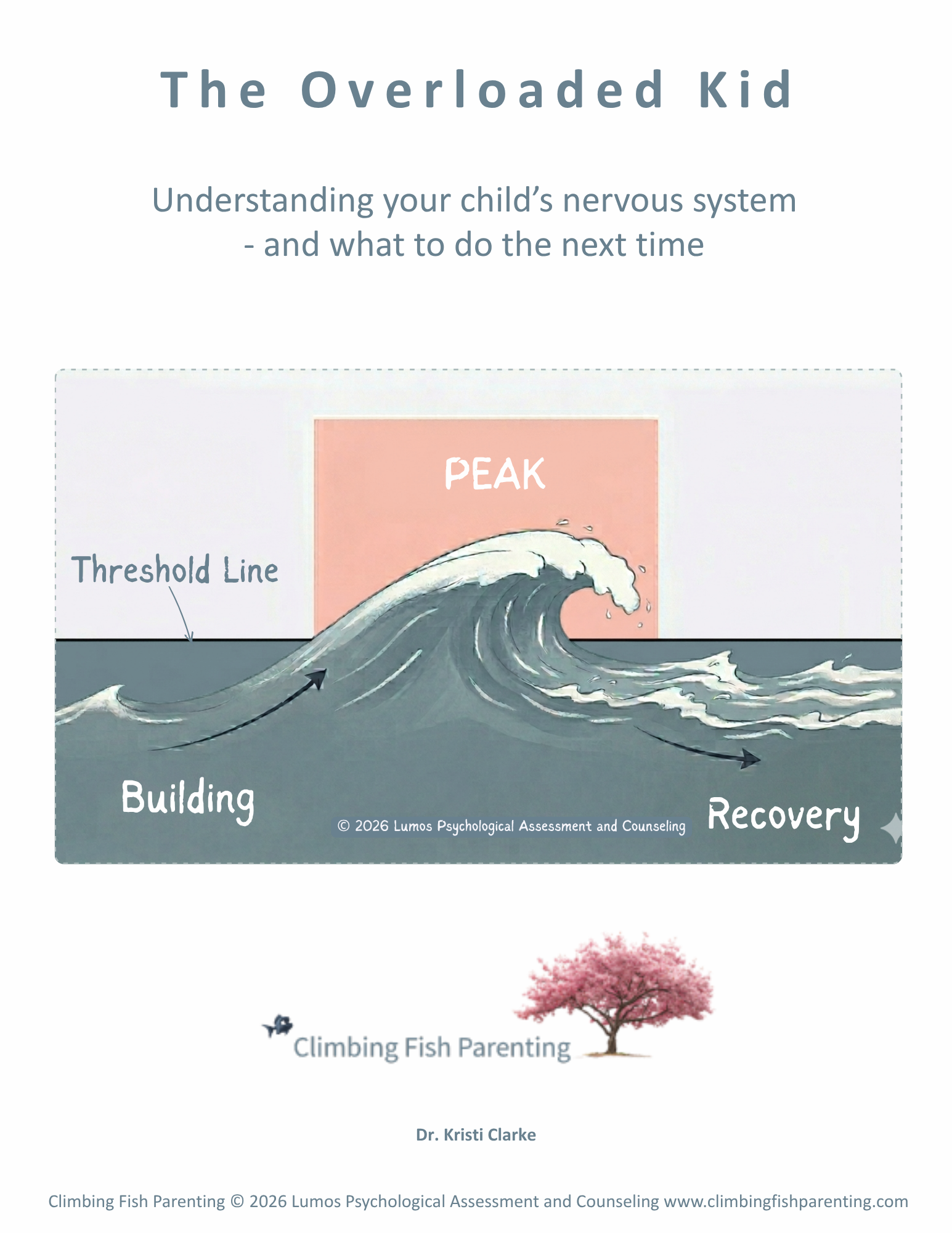
The hard moment you're seeing was never really about the hard moment. It was about everything your child was already carrying before it started — sensory input, social effort, background anxiety, all of it invisible until it isn't. Once you can see what's accumulating before the explosion, the unpredictability stops feeling random, and stops feeling like something you're failing to manage.
What's in the guide:
What's actually happening in your child's nervous system in the hours before a meltdown — and why consequences and rewards can't reach it once it's underway
The Tide Map, to find your child's baseline load across five categories, and the Tide Check, a 30-second read you can do before any known hard moment
The Co-Regulation Reference Card — exactly what to do and say differently depending on whether your child is at rising tide or full flood