
Profile Quiz Guides
You already know something's different. Here's what's actually going on — and what to do first.
You've tried the strategies. You've read the books. You've watched something work for four days and then completely stop working, with no explanation. And somewhere in the back of your mind, you've wondered if the problem is you.
It isn't. For neurodivergent kids — ADHD, autistic, anxious, sensory-different, or some combination — most of what gets handed to parents is built for a different kind of brain entirely.
There are four patterns I see most often in differently-wired kids whose parents have run out of things to try. Each one has a different mechanism behind it, and a different starting place. Find your child's below, and the guide for it goes deeper — what's actually happening in your child's brain, the tool I'd hand you first, and exactly where to start. Six pages. Short enough to read tonight. Specific enough to use tomorrow.
Not sure which one is your child? [Take the 2-minute quiz]
Already took it and forgot your result? [Retake it] or email me and I'll send you what came up.
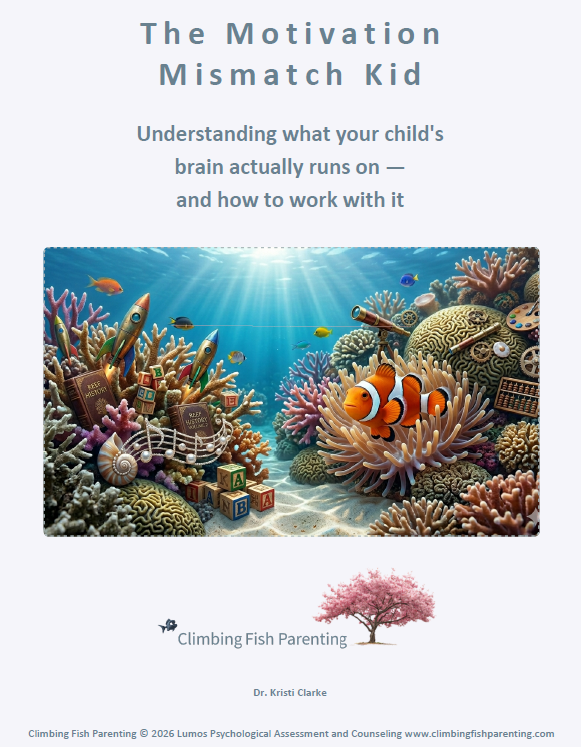
The Motivation Mismatch Kid
For the kid whose brain doesn't run on the same fuel.
If your result was Motivation Mismatch, someone has probably told you your child could do it if they just tried harder — a teacher, a relative, a pediatrician, maybe a quiet voice in your own head. You've spent real energy trying to figure out if that's true. Bigger rewards. Stricter consequences. Watching all of it fail in ways that made you feel like the problem was either your child or you.
It wasn't, and it isn't. Standard reward systems are built assuming a particular kind of brain. For a lot of neurodivergent kids, that system just doesn't fire the same way — no matter how big the chart or how appealing the prize. The fix isn't a better reward, and it isn't more pressure. It's finding what actually activates your child's brain in the first place.
What's in the guide:
Why your child can hyperfocus for an hour on one thing and disengage completely from another — and what that contradiction is actually telling you
The Spark Finder — a tool for identifying your child's real fuel type, so you stop guessing at rewards and start working with what already activates them
Why the sequence matters more than the reward itself, and how to connect to your child's fuel type before the demand instead of after
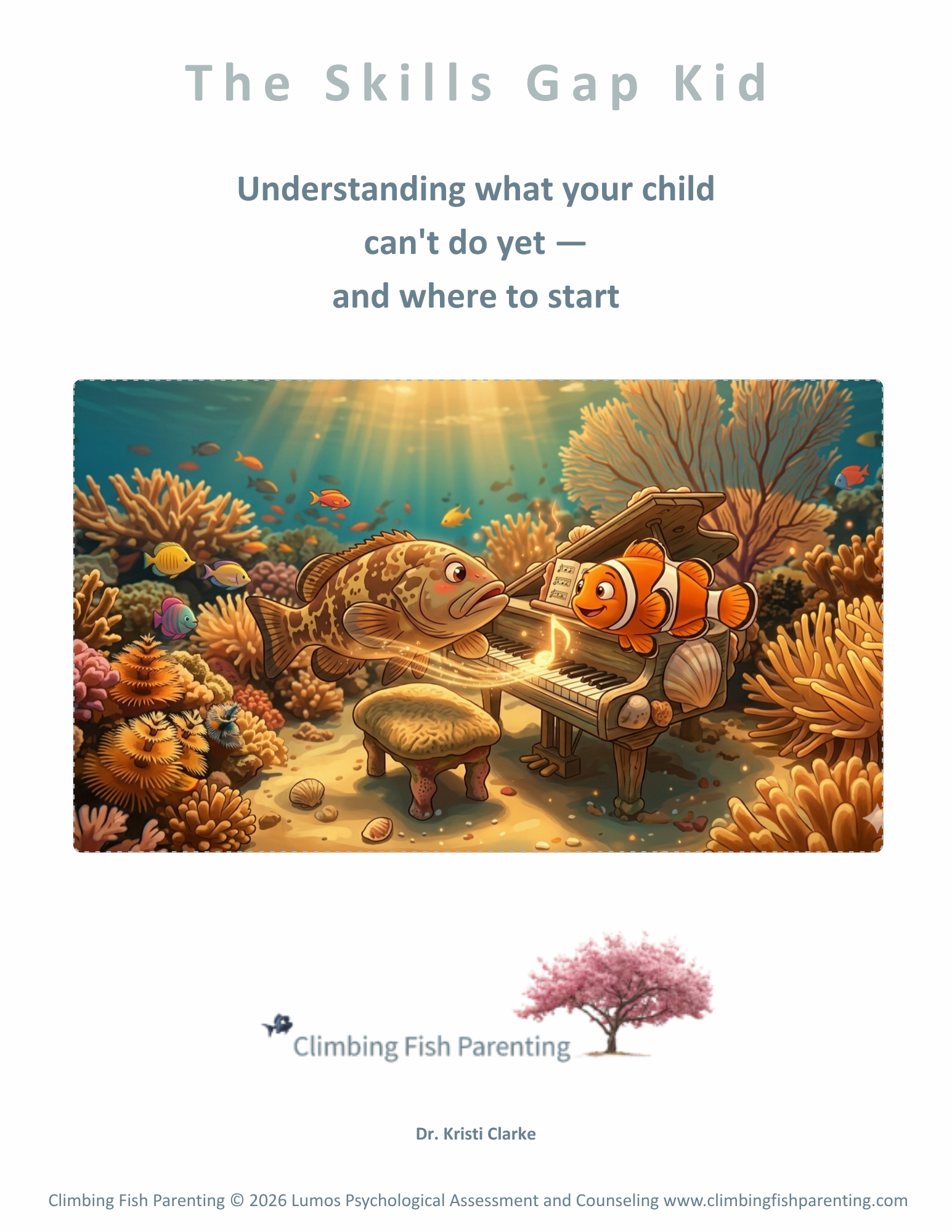
The Skills Gap Kid
For the kid who isn't refusing. They're stuck.
If your result was Skills Gap, you already know the feeling — watching your child get asked to do something you're sure they can do, and watching them not be able to get there. It doesn't look like trying. It looks like defiance, or checking out, or falling apart over something "easy." And somewhere along the way, someone — a teacher, a relative, maybe a quiet voice in your own head — has implied that your child just needs to want it more.
You've tried the charts. The reminders. The consequences that worked for a few days and then didn't. You're not missing something obvious. There's a real distinction clinicians use before deciding how to intervene: is this a skill your child doesn't have yet, or a skill they have but aren't using? Get that wrong, and every reward or consequence you try will fail — not because your child won't, but because you're asking for something that isn't built yet.
What's in the guide:
The actual question to ask before trying anything else — and why almost every strategy you've already tried skipped it
The Skills Gap Finder — two versions (younger kids and tweens/teens+) to pinpoint which domain the gap is in, across the areas that matter most at each stage
A three-step starting place for building the skill without shame, without a fight, and without waiting for motivation that was never the issue
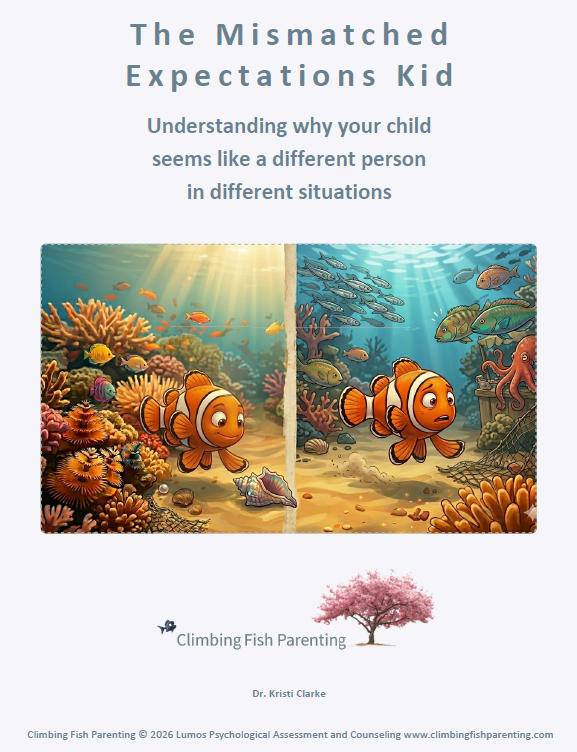
The Mismatched Expectations Kid
For the kid who isn't inconsistent. The conditions are.
If your result was Mismatched Expectations, you know the specific exhaustion of being the only one who sees the whole picture. The teacher says one thing. You're living something else entirely. And somewhere in the middle of those two stories, you've started wondering which version is real — and quietly, whether you're somehow the one making it harder.
You're not. Your child's brain is reading the room — literally — in a way that changes what's available to them moment to moment. That's not randomness, and it's not a reflection of your parenting. It's data, if you know how to collect it. And once you have it, you stop being the variable everyone questions and start being the person who actually knows your child.
What's in the guide:
Why the usual approach to "fix the behavior" was never going to work for a child whose brain responds to conditions, not just requests
The Bright Spots Tracker — a simple way to start collecting what's actually present when things go right, instead of only analyzing what went wrong
How to use it to open up a different conversation with the teacher, relative, or co-parent who's been seeing something else
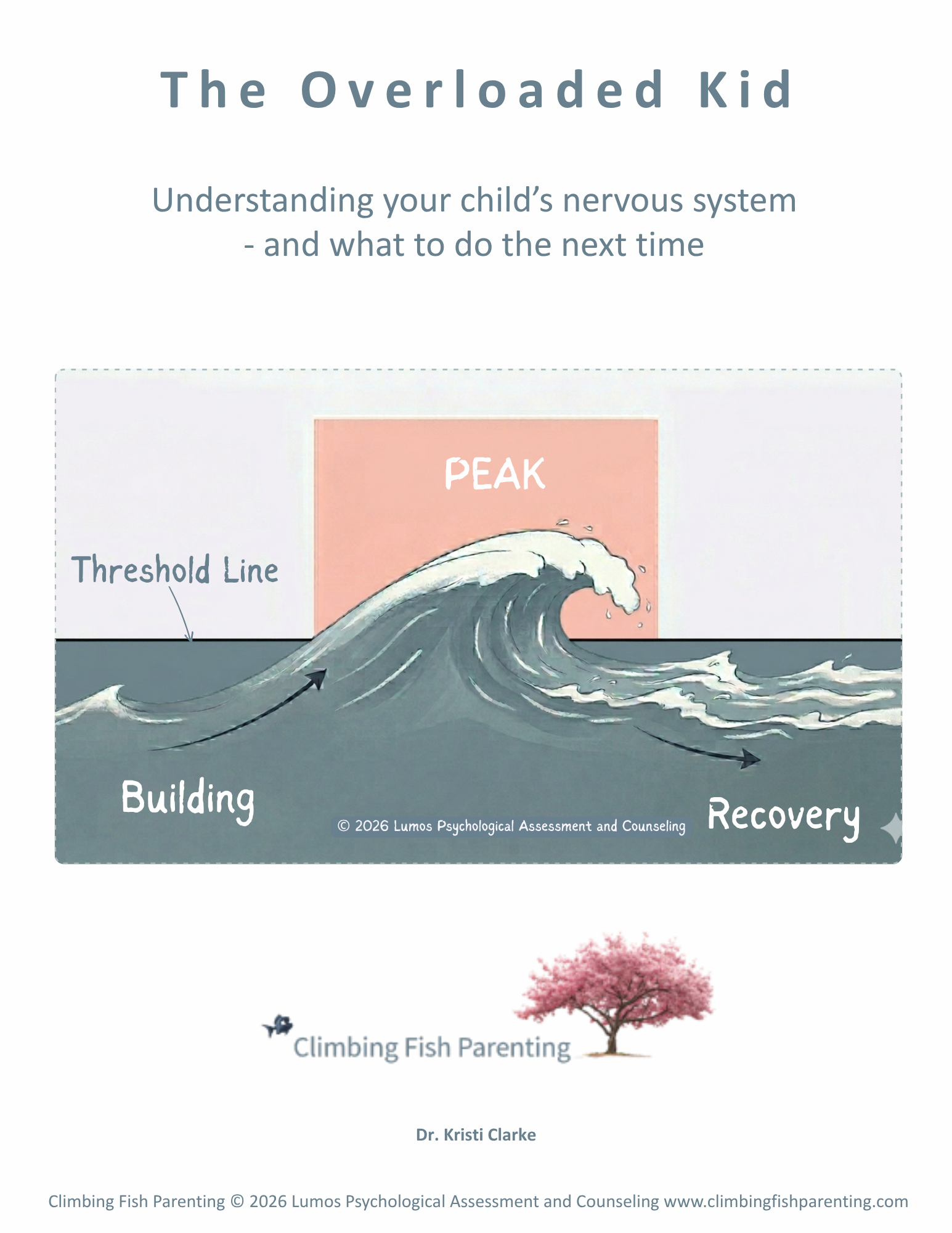
The Overloaded Kid
For the kid whose tide is already rising before you walk in the room.
If your result was Overloaded, you've lived the good-day-bad-day mystery — same request, same tone, completely different outcome, and no idea why. You've gone back through the morning a hundred times trying to figure out what you did differently. Nothing. You did nothing differently. You're exhausted from trying to predict which version of your child is going to walk through the door, and exhausted from a strategy working great on Tuesday and falling apart completely on Wednesday.
The hard moment you're seeing was never really about the hard moment. It was about everything your child was already carrying before it started — sensory input, social effort, background anxiety, all of it invisible until it isn't. Once you can see what's accumulating before the explosion, the unpredictability stops feeling random, and stops feeling like something you're failing to manage.
What's in the guide:
What's actually happening in your child's nervous system in the hours before a meltdown — and why consequences and rewards can't reach it once it's underway
The Tide Map, to find your child's baseline load across five categories, and the Tide Check, a 30-second read you can do before any known hard moment
The Co-Regulation Reference Card — exactly what to do and say differently depending on whether your child is at rising tide or full flood
Why trust me on this
I'm Dr. Kristi Clarke — a licensed psychologist, Board Certified Behavior Analyst, and mom to a kid who's wired differently. These four profiles came out of watching the same pattern over and over in my clinical work with neurodivergent kids and the parents raising them: people doing everything they were told, with strategies that were never built for their child's brain. Every guide on this page breaks down one piece of that — short, specific, and usable the same day you read it.

Not sure which one is your child?
Already took it and forgot your result? Retake it or email me and I'll send you what came up.