

Why your child seems like a completely different kid depending on where they are — and what that's actually telling you about their brain
For the parent who has heard "they're doing great at school"… and met an entirely different child at the door.
Here's Just Some of What You'll Learn in This Training:
There's a pattern a lot of parents live inside long before they can name it.
Your child is one version of themselves at school. Another version at home. And sometimes a completely different version depending on the adult in the room.
Teachers say they're fine. You're living something else entirely.
And at some point, most parents end up asking some version of:
"How can both of these things be true?"
That isn't inconsistency. It isn't manipulation. And it isn't evidence that something is wrong with your home.
It is your child's nervous system responding to what each environment is asking of it.
Some environments require your child to hold it together for hours at a time — managing attention, behavior, and emotions under constant demand.
That often involves pushing through sensory and cognitive overload, and masking struggles so they don't show up externally.
And some children can do that.
But not without cost.
That cost shows up at home. In the meltdowns, the shutdowns, the irritability, the exhaustion, the dysregulation that seems to come from nowhere.
Not because home is the problem.
Because home is where the nervous system finally puts down what it's been carrying all day.
Here's what we're covering:
What school is actually demanding of your child's nervous system all day — before they ever walk through your door
Why regulatory capacity depletes faster in some environments than others — and why the crash lands at home, with you
Why some environments bring out extraordinary capacity in your child while others feel impossible — and what that tells you about their brain
A framework for mapping what each environment is actually demanding of your child — specific enough to recognize your child in it, and practical enough to use the same night
You'll also receive:
The Environment Demand Map — a simple framework I'll walk you through step by step during the training.
If you've walked away from other explanations still feeling like something was missing — watch this before you scroll.
About this Training
Who this is for:
The parent who hears "they had a great day" and stares at them across the living room forty minutes later wondering if the teacher was describing someone else's child. You're not imagining it. You're not the variable. This is where that finally makes sense.
The parent whose child is a completely different person depending on which adult is in the room. Not inconsistent. Not two different kids. One child whose nervous system responds differently to different demands. Once you can read that pattern, you can't unsee it.
The parent who knows there's more to the story than what they've been told. Maybe you've heard explanations that felt partial. Maybe you've sensed something nobody around you has been able to name. Thursday night is where the rest of it comes into focus.
The parent who wants to understand, not just survive. You're not here for reassurance. You want to actually see what's happening. That's exactly what this training is built to show you.
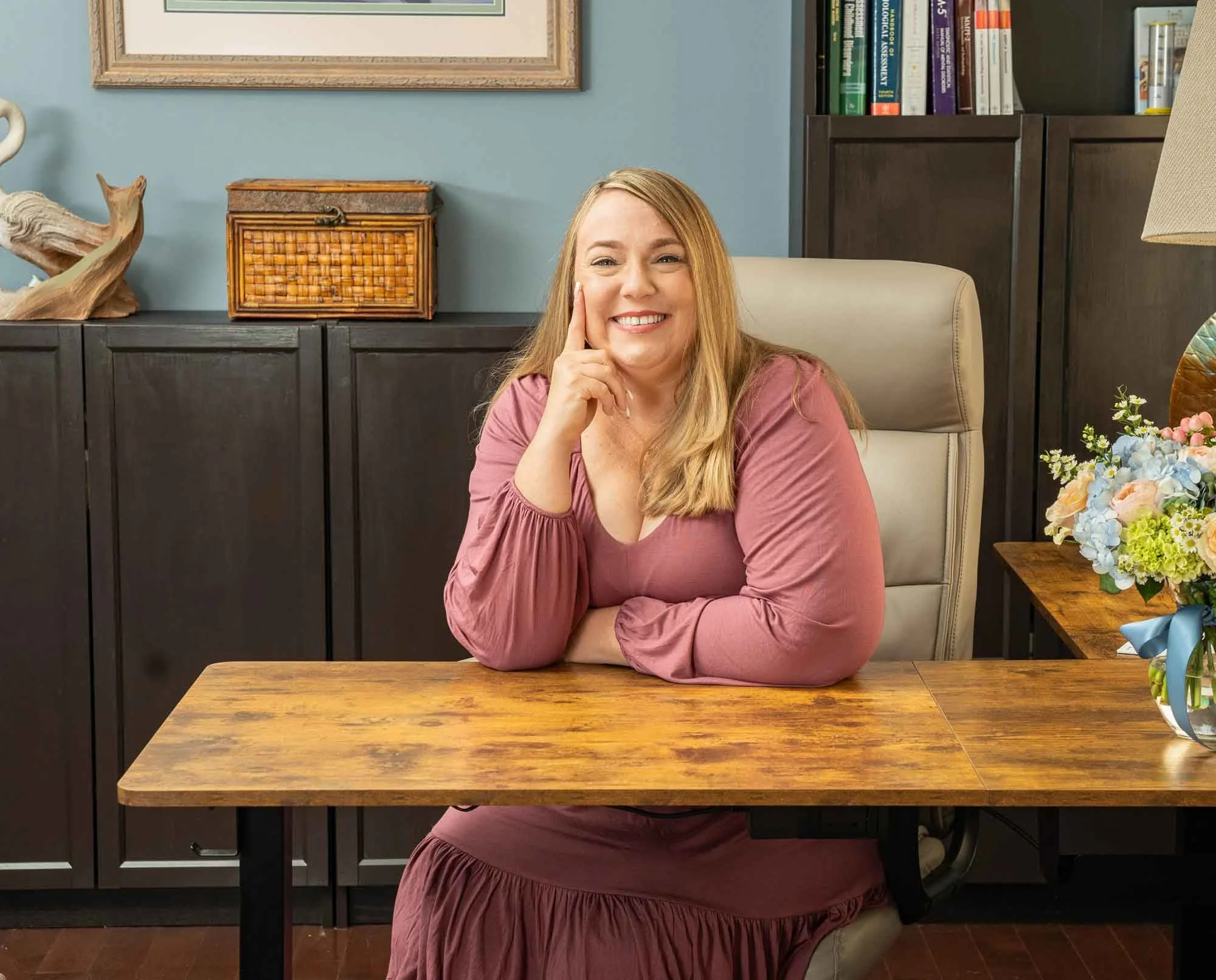
Why Trust Me on This?
I'm Dr. Kristi Clarke — licensed psychologist, Board Certified Behavior Analyst, and mom to a kid wired differently.
I have spent years sitting in the back of classrooms watching children hold it together in ways that broke my heart — because I could see exactly what it was costing them, and nobody else in the room could.
I know what it looks like when a child is holding it together for everyone else. And I know what it costs them when they finally stop.
That experience — combined with years of evaluating and working with neurodivergent children and their families, and raising a child whose brain works differently myself — is what this training is built from.
The Climbing Fish Parenting Framework